

Introduction to 19th Century Perfumery
The 19th century was a transformative period that profoundly impacted numerous aspects of society, including the art of perfumery. As industrialization swept across Europe and beyond, the profound socio-political changes initiated new ways of thinking and living, which ultimately influenced the creation and consumption of fragrances. This era coincided with significant advancements in technology, notably in chemistry, enabling perfumers to exploit synthetic compounds that were previously unavailable. Such innovations radically shifted the production landscape, moving perfumery from artisanal practices into a more commercialized realm.
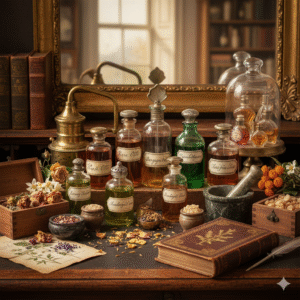
The rise of the bourgeoisie, coupled with global exploration and trade, allowed for an increased variety of aromatic materials and accessible scents. Prominent figures of the time, such as Jean Baptiste Grenouille—though fictional—embodied the obsession with scent, marking a societal embrace of perfumery as a potent means of personal expression. The fascination with fragrances paralleled broader cultural shifts, where the growing interest in personal hygiene and etiquette underscored the importance of scent in social interactions.
Moreover, the 19th century witnessed the establishment of iconic perfume houses that would lay the groundwork for modern perfume-making. Names such as Guerlain and Houbigant emerged, reflecting the melding of tradition with the emerging scientific advancements in the field. As perfumes became pivotal to identity and social status, the fragrances crafted during this period began to transcend their utilitarian purposes, evolving into luxurious commodities that catered to a burgeoning consumer market.
This amalgamation of cultural, technological, and social changes not only shaped the landscape of perfumery in the 19th century but also marked the inception of modern fragrance creation. The experimentation and creativity of this time cultivated an environment ripe for innovation, leading to timeless scents that continue to influence the perfume industry today.
Key Innovations and Technological Advancements
The 19th century marked a significant turning point in the history of perfumery, driven largely by scientific advancements and innovative techniques. One of the most pivotal breakthroughs was the introduction of synthetic fragrances, which transformed the landscape of fragrance creation. Prior to this period, perfumers relied heavily on natural ingredients derived from flowers, fruits, and spices. The advent of synthetic compounds allowed for the replication of scents that were previously difficult or impossible to produce, thereby expanding the potential for creativity within the perfume industry.
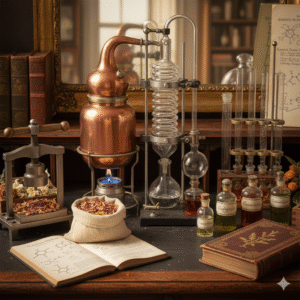
In tandem with the development of synthetic fragrances, distillation techniques underwent substantial improvements. Traditional methods of extracting essential oils from botanical sources were often labor-intensive and inefficient. The introduction of more sophisticated distillation equipment enabled perfumers to extract greater amounts of essential oils with improved purity, ensuring a more consistent product. This not only enhanced the quality of perfumes but also increased the speed of production, aligning with the growing consumer demand during the Industrial Revolution.
Moreover, the 19th century saw the exploration and incorporation of new materials into the perfumer’s toolkit. The discovery and utilization of resins, exotic woods, and even certain types of animal musk added depth and complexity to fragrance compositions, allowing for more nuanced and sophisticated scents. The combination of natural and synthetic ingredients provided perfumers with a wider palette, enabling them to craft unique fragrances that appealed to diverse tastes.
These innovations in perfumery science not only elevated the status of perfume as a luxury item but also laid the groundwork for modern perfumery practices. The seamless fusion of traditional craftsmanship with new technologies set the stage for the evolution of fragrance creation, making the 19th century a crucial period in the development of modern perfumery.
The Role of French Perfumery
During the 19th century, France emerged as the undisputed epicenter of the perfume industry, with Paris serving as its vibrant heart. This period marked a transformative era in perfumery, shaped by a multitude of cultural influences, artisan craftsmanship, and the establishment of iconic perfumeries that continue to influence the fragrance landscape today. The interplay of artistic innovation and scientific advancement propelled French perfumery to new heights.

Cultural movements during this time played a significant role in shaping the preferences and tastes for fragrances. The Romantic movement, with its emphasis on emotion and nature, inspired perfumers to create scents that evoked deep feelings and connections to the natural world. Additionally, the burgeoning Industrial Revolution facilitated the refinement of extracting techniques, allowing perfumers to achieve more intricate and varied compositions than ever before. This alignment of art and science laid the foundation for what would become the modern perfume industry.
Artisan craftsmanship was paramount in developing French perfumes. Master perfumers, known as “nez,” meticulously crafted fragrances by blending essential oils, synthetic compounds, and absolutes, resulting in nuanced olfactory experiences. These artisans poured not only technical skill but also passion and intuition into their creations, leading to a distinctive style that set French perfumes apart from those produced elsewhere. The cultivation of this craftsmanship was supported by the establishment of elite perfumeries, such as Houbigant, Guerlain, and Coty, which became synonymous with luxury and refinement.
The prestige of French perfumes during the 19th century was further accentuated by their association with the French court and high society. Perfumeries often tailored fragrances to prominent figures, further embedding these scents within the cultural milieu of France. This connection between prestige, craftsmanship, and cultural influences cemented France’s status as the leading authority in the world of perfumery, which remains largely unchanged to this day.
Influence of Eastern Fragrances
The 19th century marked a significant turning point in the evolution of modern perfumery, largely due to the influx of Eastern fragrances and practices that permeated Western sensibilities. During this period, trade routes opened up further, allowing for a vibrant exchange of cultural practices, including those related to scent. The allure of exotic ingredients and unique scent combinations from the Middle East and Asia began to fascinate Western perfumers, prompting them to explore and incorporate these elements into their own formulations.
Eastern perfumery traditions often centered around the use of rich, natural materials such as sandalwood, amber, musk, and various resins. These distinct scents were not merely perceived as fragrances but also carried cultural and spiritual significance. The introduction of such exotic components into Western perfumery resulted in the creation of products that were not only diverse in their olfactory profiles but also symbolic of a broader cultural appreciation for the East. Notably, the use of attars, which are concentrated perfume oils derived from botanical sources, became popular in Europe during this time, showcasing a direct transfer of Eastern practices into Western perfumery.
This cross-cultural exchange extended beyond the raw materials themselves; it also involved new approaches to scent composition. The blending techniques and sophisticated olfactory hierarchies developed in Eastern perfumery inspired Western artisans to experiment with layering scents and combining multiple notes to achieve more complex fragrances. As a result, traditional Western perfumery shifted, leading to the emergence of creations that harmonized simplicity with opulence.
Ultimately, the influence of Eastern fragrances in the 19th century played a pivotal role in shaping modern perfumery. This era not only enriched the palette of available scents for perfumers but also laid the groundwork for what would become a thriving industry characterized by diversity, innovation, and a fusion of cultures.
Notable Perfume Houses and Personalities
The 19th century was a pivotal era in the evolution of perfumery, characterized by significant advancements in fragrance composition and the establishment of notable perfume houses that would shape the industry. One prominent figure of this period is Jean-Baptiste Grenouille, a fictional character from Patrick Süskind’s acclaimed novel “Perfume: The Story of a Murderer.” Grenouille’s obsession with scent and his extraordinary olfactory abilities serve as a compelling exploration of the human relationship with fragrance, highlighting the heightened importance of scent in society during this epoch.
Another key personality was François Coty, often revered as the father of modern perfumery. In the late 19th and early 20th centuries, Coty revolutionized the fragrance industry by introducing innovative marketing strategies and high-quality ingredients. His establishment of the Coty perfume house in 1904 marked a significant shift towards commercial perfumery, making scent accessible to a wider audience. Coty’s pioneering spirit not only brought about popular fragrances such as “La Rose Jacqueminot” but also influenced the way perfumes were packaged and marketed, creating a blend of art and commerce that defined the era.
Additionally, many other notable perfume houses emerged during the 19th century. Houses like Guerlain, founded in 1828, gained acclaim for fragrances that fused exquisite craftsmanship with creative artistry. Their perfume “Jicky,” created in 1889, is considered one of the first modern perfumes, with a complex blend of natural and synthetic ingredients. These houses and their founders significantly contributed to the rich tapestry of 19th-century perfumery, laying the foundation for the modern fragrance landscape we know today. The innovations and memorable creations of this time reflect the growing cultural significance of perfumes, marking a transformative period in this enchanting industry.
Trends in Fragrance Composition
During the 19th century, the world of perfumery underwent a significant transformation, characterized by evolving trends in fragrance composition. This era marked a pivotal shift from simple, single-note scents to more complex and multifaceted olfactory experiences. One of the primary factors influencing this change was the rise of industrialization, which facilitated advancements in the extraction and synthesis of aromatic materials. As a result, perfumers began to experiment, incorporating a wider array of ingredients, both natural and synthetic, into their creations.
Natural ingredients like essential oils from flowers, spices, and resins remained popular; however, the introduction of synthetic compounds revolutionized fragrance formulation. The ability to create stable and long-lasting scents through synthetic means not only broadened the palette available to perfumers but also reduced reliance on the natural sourcing of ingredients, which could sometimes be inconsistent or expensive. The development of synthetic fragrances, such as vanillin and coumarin, allowed for the creation of new scent profiles that had never before been possible.
This hybrid approach, which blended traditional natural materials with novel synthetic elements, led to the emergence of unique and innovative fragrances. The evolving tastes of consumers played a crucial role in these developments. As society progressed, there was an increased demand for more sophisticated and varied scent profiles, reflecting the aspirations and moods of an ever-changing world. Fragrance houses began to craft compositions that told stories or evoked specific emotions, thus further deepening the relationship between scent and personal expression.
As a consequence, the 19th century can be seen as a formative period in the history of modern perfumery, laying the groundwork for future developments in fragrance composition. The exploration of complex scent profiles and the dynamic interplay of natural and synthetic ingredients were instrumental in shaping contemporary perfumery, setting the stage for the endless possibilities that lie within the art of scent. As such, this period not only defined the olfactory landscape of its time but also paved the way for innovations that continue to influence the industry today.
Cultural Impact of Perfume on Society
The 19th century marked a profound transformation in the role of perfume within society, as it became a potent symbol of status and identity. Fragrance was no longer simply a practical means to mask odors; instead, it evolved into a marker of social standing, personal taste, and even morality. As industrialization progressed, the burgeoning middle class emerged, and with it came a heightened awareness of personal grooming and presentation. Perfume began to represent not only individual preference but also adherence to societal norms and expectations.
In this era, fragrance was intrinsically linked to notions of femininity and masculinity. For women, perfume signified elegance, refinement, and virtue. Floral and light scents gained favor, reflecting ideals of the delicate and nurturing feminine persona that was celebrated in society’s narratives. Conversely, for men, the use of perfume was often associated with power and sophistication. Stronger, earthy fragrances, often derived from leather, woods, and spices, were thought to project masculinity, commanding respect and admiration. Thus, a clear demarcation based on gender emerged, paving the way for distinct marketing strategies tailored to each demographic.
Moreover, class distinctions were reinforced through perfume consumption. High-quality fragrances, often produced by renowned perfumers, became a luxury that only the elite could afford. This exclusivity gave rise to a culture of aspiration; those in lower social strata often sought to emulate the styles and fragrances of the upper class. Hence, perfume transcended mere personal choice, becoming a social currency critical for navigating the complexities of class hierarchy. The increased availability of affordable scents allowed broader populations to partake in the aromatic culture, albeit in diluted forms of luxury. This dynamic illustrates how perfume not only reflected personal identity but also shaped societal perceptions and interactions in the 19th century, thus leaving a lasting impact on cultural practices surrounding fragrance.
Challenges and Controversies in the Industry
The 19th century marked a pivotal period in the evolution of modern perfumery, characterized by significant challenges and controversies that shaped the industry. One of the foremost debates involved the widespread use of synthetic ingredients versus natural components in fragrance formulations. As the Industrial Revolution progressed, the ability to manufacture synthetic compounds opened up new possibilities for perfumers. However, this innovation sparked heated discussions regarding authenticity and the perceived value of perfumes derived from natural sources. Critics of synthetic fragrances argued that they compromised the tradition and artistry of perfumery, leading to a schism that persists even today.
Furthermore, the sourcing of ingredients became increasingly contentious due to the impact of colonialism during this era. European powers expanded their empires, resulting in exploitation of natural resources in colonized regions. These practices not only affected local economies but also raised ethical questions about the impact on indigenous communities. As a consequence, the perfume industry faced scrutiny regarding the sustainability and humanitarian implications tied to the acquisition of rare and exotic ingredients. This conversation surrounding colonialism invited perfumers to consider their role in responsible sourcing and the broader implications of their creations.
In addition, public health concerns emerged amid the growing popularity of fragrances. The proliferation of various synthetic compounds and materials raised alarms about potential allergic reactions and toxicity. The lack of regulatory standards meant that consumers often faced risks without full awareness of the ingredients in their perfumes. This environment forced the industry to confront the pressing need for greater transparency and safety in fragrance formulations, highlighting the delicate balance between creativity, commerce, and consumer protection.
Legacy of 19th Century Perfumery
The 19th century was a pivotal era for the art of perfumery, marked by significant innovations and transformations that laid the groundwork for contemporary practices in the fragrance industry. This period witnessed the introduction of synthetic aroma compounds, which allowed perfumers to create an array of scents that were previously unattainable with only natural ingredients. The ability to standardize and reproduce these scents facilitated a level of creativity and complexity in fragrance formulation that was unprecedented. Such advancements not only expanded the olfactory vocabulary but also made perfumes more accessible to a broader audience.
Additionally, the 19th century saw the professionalization of the perfumery industry. As markets for perfumes expanded, it became increasingly important for perfumers to refine their craft through education and the establishment of brand identities. This established the notion of luxury branding, laying the foundation for the way modern fragrances are marketed and perceived today. The juxtaposition of traditional craftsmanship with industrial advancements continues to influence how contemporary perfumers approach scent creation, balancing innovation with heritage.
Furthermore, the era’s fascination with nature, chemistry, and the exotic led to the creation of iconic fragrances that are still celebrated in contemporary perfumery. Many classic scents formulated during the 19th century, such as those embodying floral, oriental, and fougère notes, still resonate with modern consumers. The trends set during this time, including the rise of niche perfumery and the importance of storytelling in branding, remain relevant; they have evolved but retain their roots in this vibrant historical context.
In conclusion, the legacy of 19th-century perfumery is deeply woven into the fabric of modern fragrance design and industry practices. The innovations, professionalization, and cultural influences of this transformative era continue to inspire and shape the world of contemporary perfumery.
